

Kosher restaurant marketing works when it answers the questions an observant diner asks before walking in: who supervises the kitchen, is it open on Shabbat or Yom Tov, and is it near where I am staying. Diners and travelers look for those answers in directories, community channels and publications they already trust. If you run a kosher restaurant, put your supervision, hours and location where those readers search. A goKosher restaurant listing is one way to do that, and it is free for diners to use.
This guide covers who you are marketing to, what information they need, which channels exist, how to time campaigns around the Jewish calendar, and how to measure results. It makes no halachic rulings. Questions about kashrut standards go to your own rabbi.
Table of Contents
- Who are you marketing to?
- What do observant diners need to see before they visit?
- Where do kosher diners and travelers look?
- How do you time campaigns to the Jewish calendar?
- How do you take reservations and reduce no-shows?
- How do you measure what works?
- Where does goKosher fit?
- FAQ
- Sources
Who are you marketing to?
Most kosher restaurants have three audiences. Each looks for different details.
- Local regulars. Families and individuals who eat out often. They want menu changes, events, catering and takeout for Shabbat and holidays.
- Visitors and travelers. They arrive in an unfamiliar city and need to find a restaurant quickly. They compare supervision, distance from their hotel and opening hours.
- Event hosts. Families planning a simcha, a Bar or Bat Mitzvah or a group meal. They need capacity, catering terms and a contact person.
Write one clear line for each group on your website and listings. A traveler does not need your loyalty program. A regular does not need directions from the airport.
What do observant diners need to see before they visit?
OK Kosher advises diners to find out who is responsible for the kosher supervision before eating out, and says establishments that are trustworthy are willing to answer questions about their certification. Your marketing should answer that question before it is asked.
Put these items on every page and listing:
- The name of the supervising agency or rabbi, written exactly as it appears on your certificate.
- The type of kitchen: meat, dairy or pareve, as you describe it. Use the terms your supervisor uses.
- Hours, including Shabbat and Yom Tov. State clearly whether you are closed. If you serve holiday meals, say how reservations work.
- Address, neighborhood and nearby hotels or shuls. Travelers search by location.
- Menu, with a current date. Outdated menus create avoidable surprises.
- A phone number or email where a diner can ask a certification question.
OK Kosher also notes that hotels or restaurants kept open to serve holiday meals require reservations and payment before Shabbat or the holiday begins. If that applies to you, say so in plain words on your booking page, with the cutoff time.
Do not describe your certification in a way your supervisor has not approved. Diners are told to confirm certification directly with the restaurant, so keep your wording consistent with the certificate and make it easy to ask. For a diner's view of the same checks, see our guide to finding a kosher restaurant and its certification.
Where do kosher diners and travelers look?
Observant diners use several types of sources. A restaurant that appears in several of them is easier to find and easier to trust.
Directories and apps
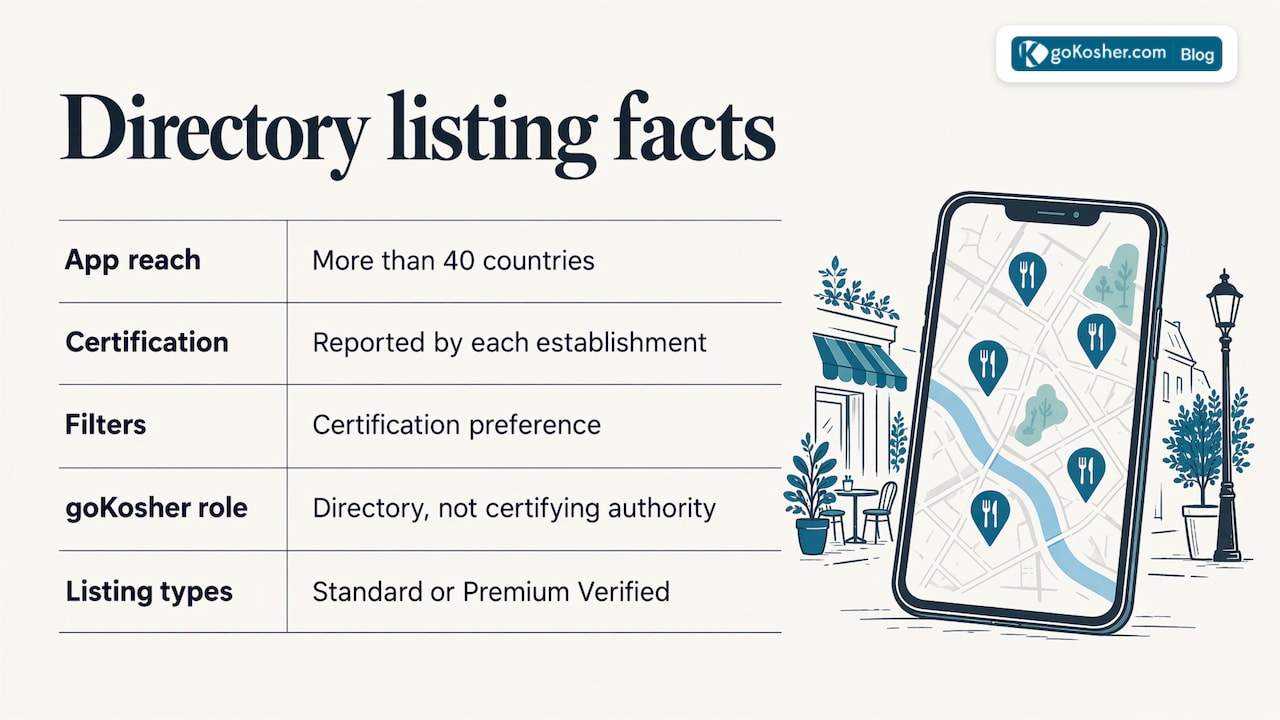
Travelers often start with a directory. One kosher app, for example, covers more than 40 countries, shows certification as reported by each establishment and lets users filter by certification preference. That means the details you submit are what diners see. Keep them accurate and current.
goKosher is a directory and discovery platform. It is not a certifying authority and does not supervise or guarantee any listing, so diners are told to confirm certification with you directly. Listings can be Standard or Premium Verified. Browse the kosher restaurants directory to see how listings appear, or look at regional pages such as kosher restaurants in the USA, New York, Europe and Israel.
Community publications and certifier networks
Some certifying organizations promote the businesses they supervise. The Orthodox Union has described 17 community programs across three continents and 300+ cities, weekly publications reaching over 200,000 consumers and a magazine mailed to 45,000 households. Ask your own certifier what marketing support it offers.
Food media and local guides
Kosher food magazines and city blogs publish sponsored and editorial features. One New York outlet publishes a rate card for sponsored features, social packages and premium partnerships, and labels sponsored content clearly. A kosher food magazine states that its readers serve new finds to guests and recommend them in group chats, which is the word-of-mouth effect a restaurant wants.
Community advertising networks
Some agencies place campaigns across Orthodox news sites, WhatsApp channels, newsletters and digital billboards. AdWorks Media Group describes WhatsApp channels of 2,000 to 95,000 subscribers and newsletters of 4,000 to over 50,000. Programs at that scale suit large operators and chains more than a single-location restaurant. Another network places displays inside kosher restaurants and flyers on takeout bags, which suits restaurants that want to advertise to their own foot traffic.
Creators and influencers
A case study of a kosher Japanese restaurant in Surfside, Florida, reports that working with a Miami kosher creator produced 86,000 views and a measurable rise in reservations. The agency behind it concludes that audience overlap matters more than audience size. For a restaurant, that means a smaller local creator whose followers keep kosher can be more useful than a large general account.
How do you time campaigns to the Jewish calendar?
Community channels follow the calendar, and so should you. Plan holiday promotions weeks ahead, because families book meals, catering and travel early.
Upcoming dates to plan around:
- Passover 2027 begins on the evening of April 21, 2027. Families and travelers plan Pesach meals, takeout and programs well before. Restaurants that are closed or operate differently over Pesach should say so clearly, using wording approved by their supervisor.
- Shavuot, Sukkot, winter and summer travel seasons each bring visitors. Check the Jewish holidays calendar for exact dates and confirm them against your local community calendar.
AdWorks Media Group advises that campaigns follow community norms: modest imagery, plain and honest offers, and nothing posted on the Sabbath or Jewish holidays. Schedule posts, emails and ads to go out before Shabbat or Yom Tov begins, and check that automated tools are not set to publish during them. Where a question arises about what is appropriate, ask your own rabbi.
Travelers also search by season. Families planning a program look at pages such as Passover programs, Sukkot programs, winter sun programs, ski programs and summer programs. If you are near a resort or hotel that hosts a program, say so on your listing.
How do you take reservations and reduce no-shows?
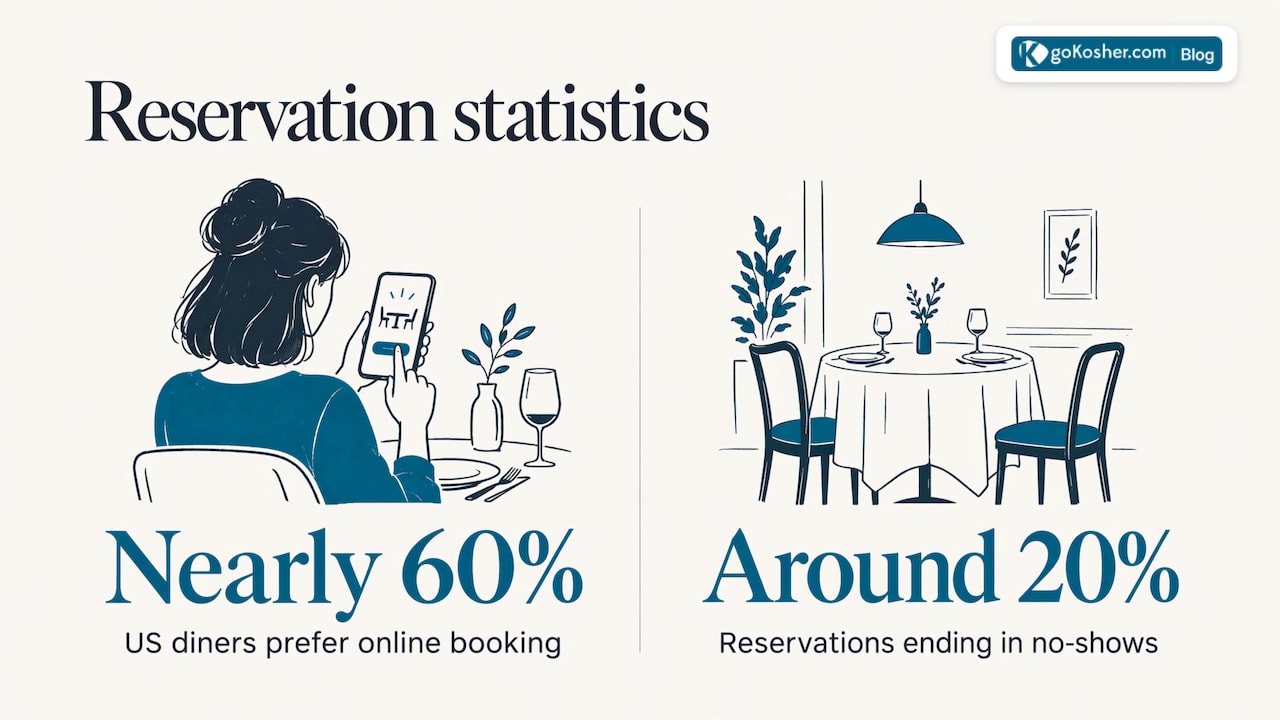
A clear booking path converts interest into covers. A Miami kosher restaurant, 41 Miami, added an online booking widget that shows food images and sample menus and offers full prepayment including taxes and gratuity to reduce no-shows. The same source reports that nearly 60% of US diners prefer online booking and that around 20% of reservations end in no-shows.
For Shabbat and holiday meals, set the reservation and payment cutoff before the day begins, and say so on the page. Answer calls promptly during the week before a holiday. Hospitality teams that want a deeper look at turning calls into bookings can read about reservation call handling, which is written around hotels but applies to any busy reservation line.
How do you measure what works?
Track each channel separately, so you know where reservations come from.
- Use a unique code or link per channel. One kosher food magazine reports advertiser results measured with a dedicated code and UTM tracking, including bottles sold within 24 hours.
- Ask at booking. Add one question: how did you hear about us?
- Compare reservations before and after a campaign, as the Surfside case study did when it reported a measurable uptick.
- Count inquiries from directories. Note how many calls and messages mention a listing.
- Watch repeat visits. Regulars matter more than one-time visitors.
Review results monthly and drop channels that bring views but no bookings. Relevance to the audience matters more than raw reach.
Where does goKosher fit?
Travelers and families use goKosher to search by destination, category, season and service type, and to contact providers directly or compare offers. Diners do not pay to use the directory. Restaurants, caterers and other providers can list their business, and listings can be Standard or Premium Verified. A listing puts your name in front of people who are already planning a trip, a Shabbat away or a celebration.
If you want to be found by observant travelers, start with the kosher restaurants directory. Caterers and venues can look at simchas and events. Hotels, cruises and tours can see the Premium Listing page. goKosher markets and helps people discover listings. It does not certify, supervise or guarantee kashrut, and it tells users to confirm certification directly with each provider.
FAQ
What is the first thing a kosher restaurant should publish online?
Publish the name of your supervising agency or rabbi exactly as on your certificate, along with your kitchen type and hours, including Shabbat and Yom Tov. Observant diners are advised to find out who is responsible for supervision before they eat out. Add a contact for certification questions.
Is kosher restaurant advertising worth it for a single location?
Often the best start is low-cost and local: an accurate directory listing, your certifier's channels and a nearby creator whose audience keeps kosher. Large network campaigns are priced for bigger operations. Track results by channel before you commit more budget.
Can I run promotions on Shabbat or holidays?
Plan so that nothing is posted or sent during Shabbat or Yom Tov, which is the norm in Orthodox community advertising. Schedule content ahead of time and check your tools. For any question about what is appropriate, consult your own rabbi.
Does goKosher certify the restaurants it lists?
No. goKosher is a marketing and discovery directory, not a certifying authority. It does not certify, supervise, inspect or guarantee any listing. Diners should confirm certification directly with the restaurant and ask their own rabbi about their standards.
Sources
- Restaurants & Travel, OK Kosher
- Websites and Apps, Kosher Institute
- OU Kosher Offers Marketing Support for Certified Companies
- Advertise, Pretty Kosher
- Fleishigs media kit
- AdWorks Media Group
- My Jewish Ads
- Hikari x Kosher In Style case study, One Media Society
- How 41 Miami Improved Reservations, Now Book It
- Hotel reservation call center, HotelHero.ai
Recommended
goKosher is a directory and discovery platform, not a kashrut certifier. Always confirm kosher certification directly with the provider, and consult your own rabbi on questions of Jewish law.